I Ching vs Tarot: Why One is a Psychological Tool and the Other a Strategic Playbook

Hello everyone, I’m Kira.
For the past ten years, I’ve studied and practiced both Tarot and the I Ching extensively. Over the years of professional readings, spiritual exploration, and teaching, the single most common question I receive from clients and students is: “Kira, I’m going through a really tough time in my career/relationship—should I get a Tarot reading, or should I consult the I Ching?”
So, in this article, that’s exactly what I’m going to unpack.
If you’re wondering whether to choose the I Ching or Tarot, here’s the short answer:
- Choose Tarot if you want insight into your emotions, beliefs, and inner conflicts.
- Choose the I Ching if you need guidance for making decisions or understanding how a situation is likely to unfold.
Both are valuable, but they answer different kinds of questions.
For centuries, humanity has turned to esoteric systems and divination tools to make sense of the universe, navigate difficult decisions, and gain deeper self-awareness. When exploring these spiritual tools, two of the most prominent and enduring systems stand out: the Western Tarot and the Eastern I Ching.
If you are beginning your spiritual journey or looking to expand your esoteric practices, you will inevitably encounter the debate of I Ching vs Tarot. While both systems offer profound wisdom, they are built upon fundamentally different philosophies.
Understanding the core mechanics behind each can help you choose the right tool for your specific questions and personal growth.
Here is a complete breakdown of how these two legendary oracles operate, how they differ from traditional Eastern systems like Bazi, and how to decide which one speaks to your soul.
Before jumping into a detailed analysis, here is an intuitive overview to give you a baseline understanding of both systems.
I Ching vs Tarot: A Direct Comparison
To clearly illustrate the I Ching vs Tarot comparison, here is a quick reference guide highlighting their primary differences:
| Feature | The Tarot | The I Ching |
| Origin | 15th Century Europe | 3000+ years ago, China |
| Core Nature | Psychological analysis & projection tool | Strategic alignment & trend mapping |
| Core Logic | Symbolic reflection, subconscious reading | Yin/Yang dynamics, trend assessment |
| Best For… | “What is my current internal block?” | “How will this situation develop?” |
| Learning Curve | Visual and intuitive; relatively easy to start | Requires understanding the hexagram system; steeper curve |
| Interpretation | Intuitive storytelling via art | Analytical reading of hexagram text |
| Time Focus | Heavily focused on the “Present” | Heavily focused on “Momentum” and future trends |
| Overall Style | Gentle, therapeutic, exploratory | Direct, pragmatic, strategic |
Which System Should You Choose?
There is no definitive “winner” in the I Ching vs Tarot debate, your choice depends entirely on the nature of your question.
- Choose the Tarot if your questions are emotional, relational, or focused on self-discovery. If you are asking, “Why am I so conflicted about this relationship?” or “What is the real reason I feel stuck in my career right now?”, Tarot excels at providing the deep, psychological reflection you need to untangle your thoughts.
- Choose the I Ching if your questions are decision-based, strategic, or focused on timing. If you are asking, “Is now the right time to enter this business venture?” or “Is it time to lay my cards on the table with my partner?”, the I Ching’s practical, playbook-inspired strategy is what you need to navigate external forces.
Tarot: Dialoguing with the Subconscious Through Imagery
Originating in 15th-century Europe, Tarot began as a simple parlor card game before evolving into a powerful tool for divination and introspection. A standard deck contains 78 cards: 22 Major Arcana cards representing major life themes, and 56 Minor Arcana cards reflecting daily situations.
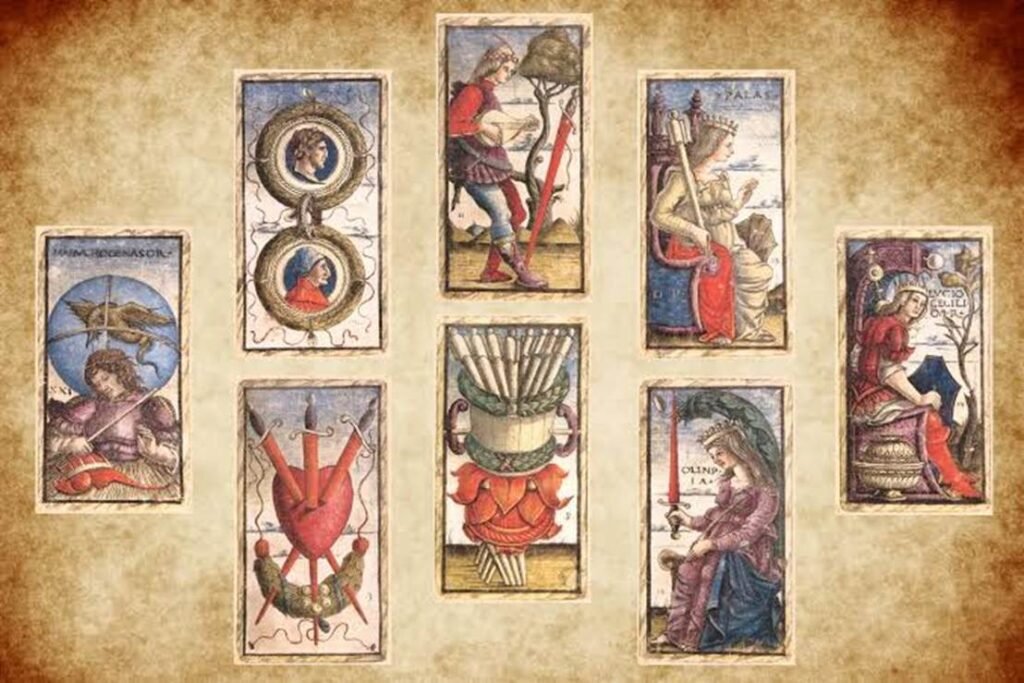
Many modern practitioners view Tarot as a tool for psychological reflection. When you look at a Tarot card, your attention is naturally drawn to a specific detail. That magnetic pull is your subconscious speaking to you. Take “The Tower” card, for example: where one person might look at the imagery and see terrifying destruction, another might see the people escaping a confining structure, feeling a sense of ultimate liberation. What you see in the cards depends on what you are experiencing internally.
The I Ching: Reading the Momentum of Change via a Symbolic Method
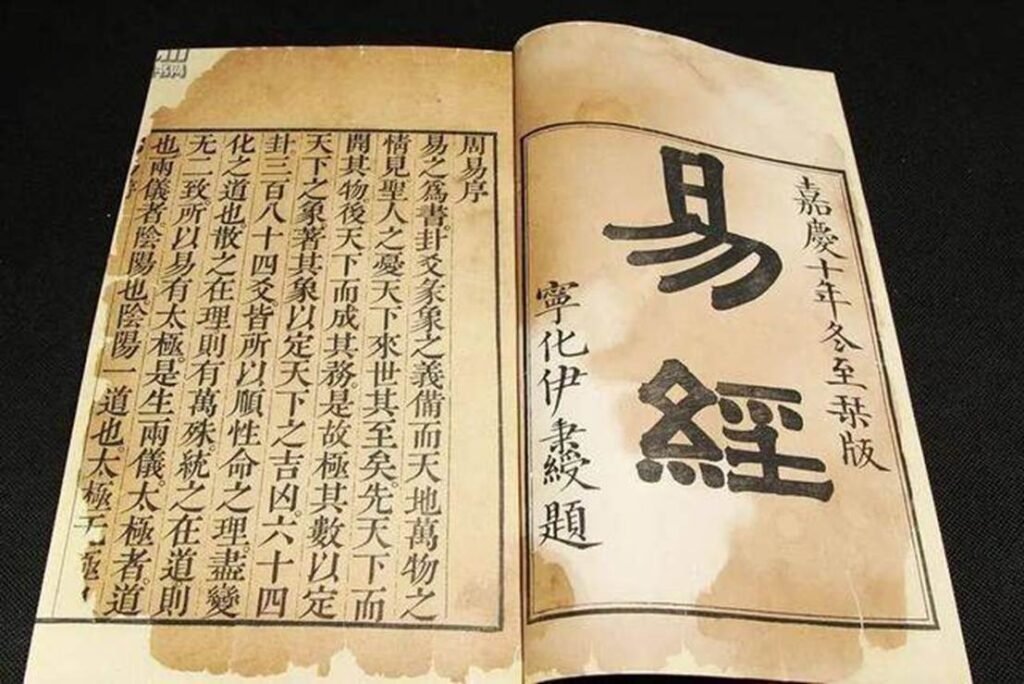
The I Ching, or Book of Changes, boasts over 3,000 years of history, making it one of China’s oldest and most revered classic texts. Unlike the image-based Tarot, the I Ching is built on a massive mathematical and philosophical framework consisting of 64 hexagrams and 384 lines, all rooted in the binary duality and constant flux of Yin and Yang.
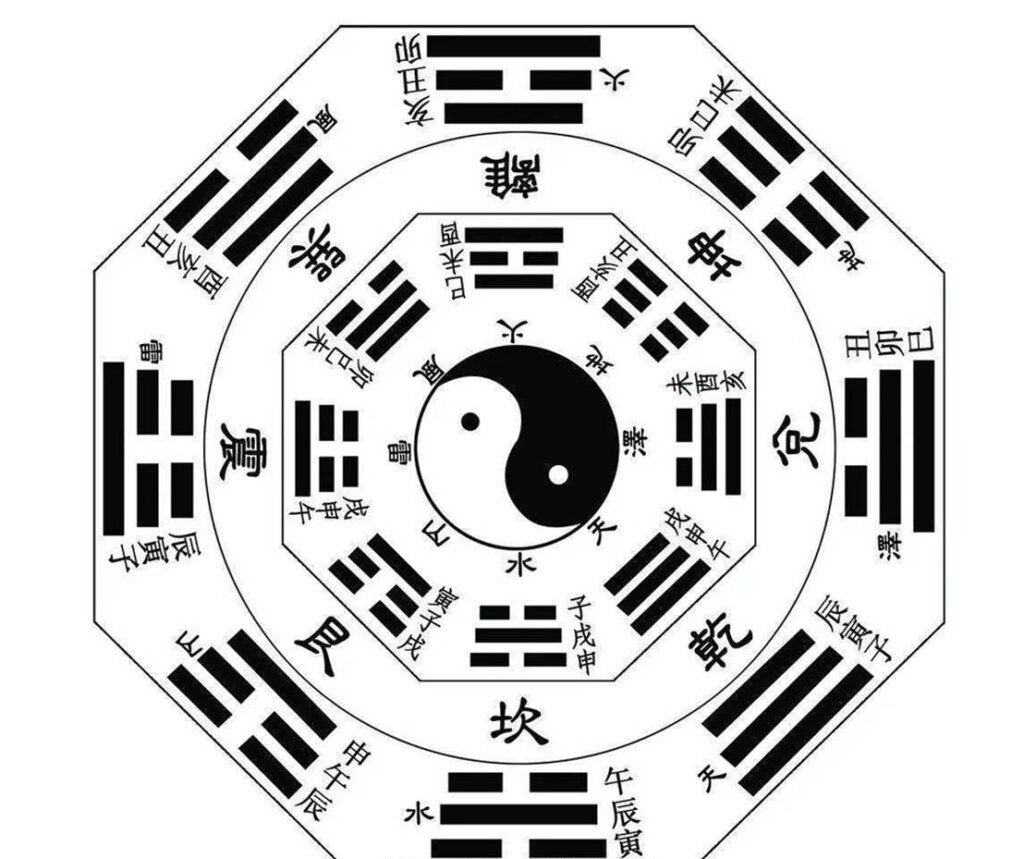
If Tarot is a mirror that allows you to analyze your inner psyche, the I Ching is a strategic playbook. It outlines your current position on the field, maps out the external forces at play, and suggests the most advantageous move to run.
The core of the I Ching is not ‘fortune-telling’ in the traditional sense, but assessing momentum and trends. Every hexagram describes the dynamic shift of a situation, advising you on when to advance, when to retreat, and when to patiently wait.
The Shared Core of Tarot and the I Ching, Not Just Fortune-Telling
This projection mechanism points to the most significant difference between these two systems and traditional, deterministic fortune-telling. Neither Tarot nor the I Ching are pure forms of fatalistic divination.
Tarot acts as a fluid mirror of your current mental state, and the I Ching serves as a dynamic calculation tool offering strategic advice.
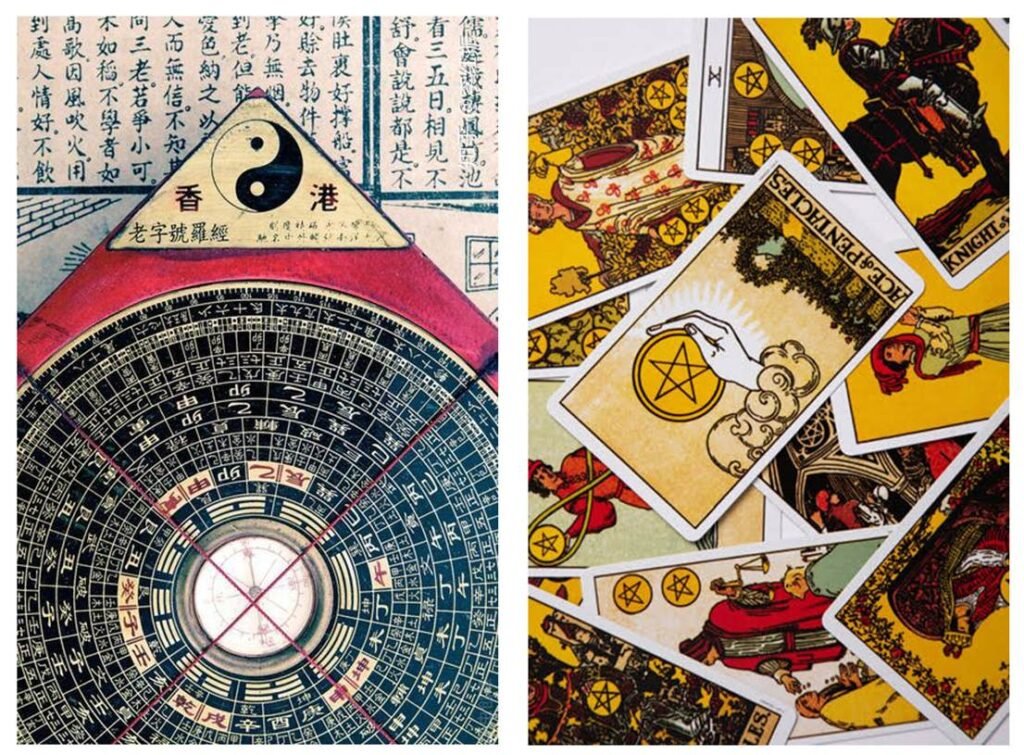
By framing them as analytical and calculating frameworks rather than rigid predictions of the future, they are freed from the narrow—and sometimes deceptive—confines of “fortune-telling.” They become powerful instruments for self-exploration, decision-making, and emotional healing.
This shared mechanism is best explained by the “Synchronicity” theory proposed by Swiss psychiatrist Carl Jung. Jung suggested that seemingly random events can have meaningful, non-causal connections. When you draw a Tarot card or cast an I Ching hexagram, it is not a dictate of “fate.” Rather, in that exact moment, your internal psychological state creates a resonance with that specific symbol, pulling the subconscious into the conscious light.
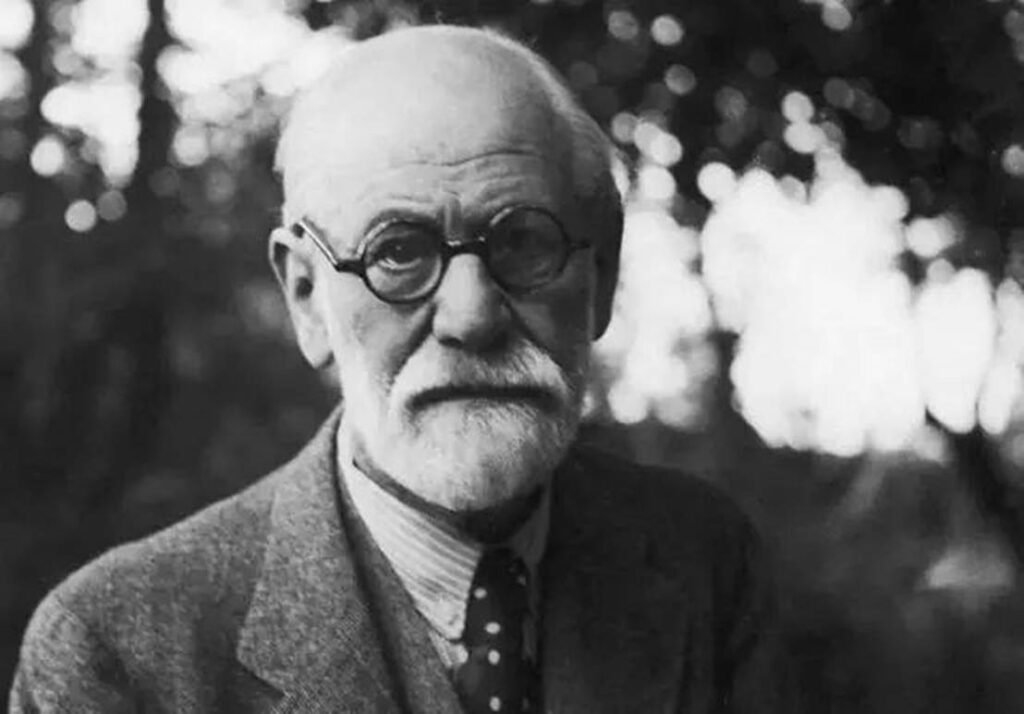
Fascinatingly, Jung later used the I Ching as one of the most influential illustrations of his concept of Synchronicity, viewing its hexagrams not as fortune-telling, but as a symbolic framework for communication between the conscious and unconscious mind.
He recognized remarkable parallels between modern psychology and Eastern philosophy: the unconscious aligns with Yin, the conscious with Yang, and their integration forms Taiji. Ultimately, both tools use different symbols to achieve the exact same goal—revealing the deep, synchronous harmony between our inner psyche and the outer universe, echoing the ancient wisdom of “the Unity of Heaven and Humanity” (Tian Ren He Yi).
Frequently Asked Questions About I Ching vs Tarot
Q1: Is the I Ching more accurate than Tarot?
Neither system is inherently more accurate—they simply answer different kinds of questions. Tarot is often used to explore emotions, subconscious patterns, and personal growth, while the I Ching focuses on the dynamics of change and offers strategic guidance for decision-making. The quality of the reading depends more on the practitioner’s understanding and the clarity of the question than on the system itself.
Q2: Which is better for beginners, Tarot or the I Ching?
For most beginners, Tarot is easier to learn because it relies on symbolic imagery and intuitive interpretation. The I Ching has a steeper learning curve, as it requires understanding hexagrams, changing lines, and the philosophical concepts of Yin and Yang. However, if you’re naturally drawn to Eastern philosophy, the I Ching can be just as rewarding.
Q3: Can Tarot and the I Ching predict the future?
Neither Tarot nor the I Ching should be viewed as tools that predict a fixed future. Many modern practitioners see them as systems that reveal current patterns, potential outcomes, and possible directions based on present circumstances. Since human choices continuously shape the future, both systems are better understood as guides rather than absolute predictors.
Q4: Can I use Tarot and the I Ching together?
Absolutely. In fact, many experienced practitioners combine both systems because they complement each other. Tarot helps uncover your inner emotions, beliefs, and psychological patterns, while the I Ching offers insight into external circumstances and the momentum of a situation. Together, they provide a more balanced perspective for making thoughtful decisions.
Q5:Is the I Ching a religion?
No. Although the I Ching has influenced Confucianism, Daoism, and Chinese philosophy for thousands of years, it is not a religion itself. It is a classic text that explores the principles of change, balance, and decision-making. Today, people study and consult the I Ching from many different cultural, philosophical, and spiritual backgrounds.
Conclusion
Of course, because these two tools serve different purposes—one focusing on internal psychology and the other on external momentum—the absolute best approach is not to limit yourself to just one.
By using Tarot to map your internal emotional state and the I Ching to track the external momentum of your environment, the cross-referenced results offer a vastly more complete picture than either system could provide alone.