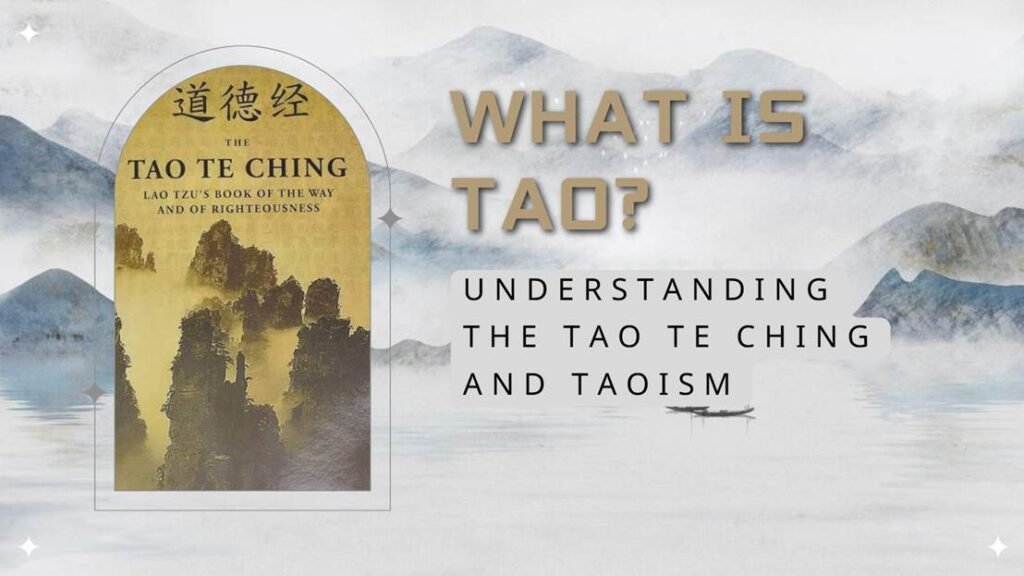
What is Tao? Understanding the Tao Te Ching and Taoism

Hello everyone, I’m Kira.
For years, my work has focused on bridging the depth of Eastern philosophy with the practical realities of modern lives. Throughout my study of classical texts, I’ve noticed one question keeps surfacing in almost every meaningful conversation I have:
What is Tao?
Years ago, I hit a wall. I was exhausted, constantly trying to force every outcome to go my way. Then, I stumbled upon a simple sentence in the Tao Te Ching. It changed the way I understood effort, success, and inner peace.
We live in a world obsessed with hustle, productivity, and rigid control. Yet so many of us quietly wonder, “Is there a more harmonious way to live?” More than two thousand years ago, Chinese philosophers asked the same question. Their answer was the Tao.
If you’re standing at your own crossroads today, welcome to My Tao Path. Let’s explore this ancient philosophy together and discover how its timeless wisdom can help us.
What Does Tao Mean in Chinese?
Before we dive into grand philosophical concepts, let us start where all true understanding begins—with the language itself. What does Tao mean in Chinese? Written as 道, the character translates literally to “a path,” “a route,” or “the way.”
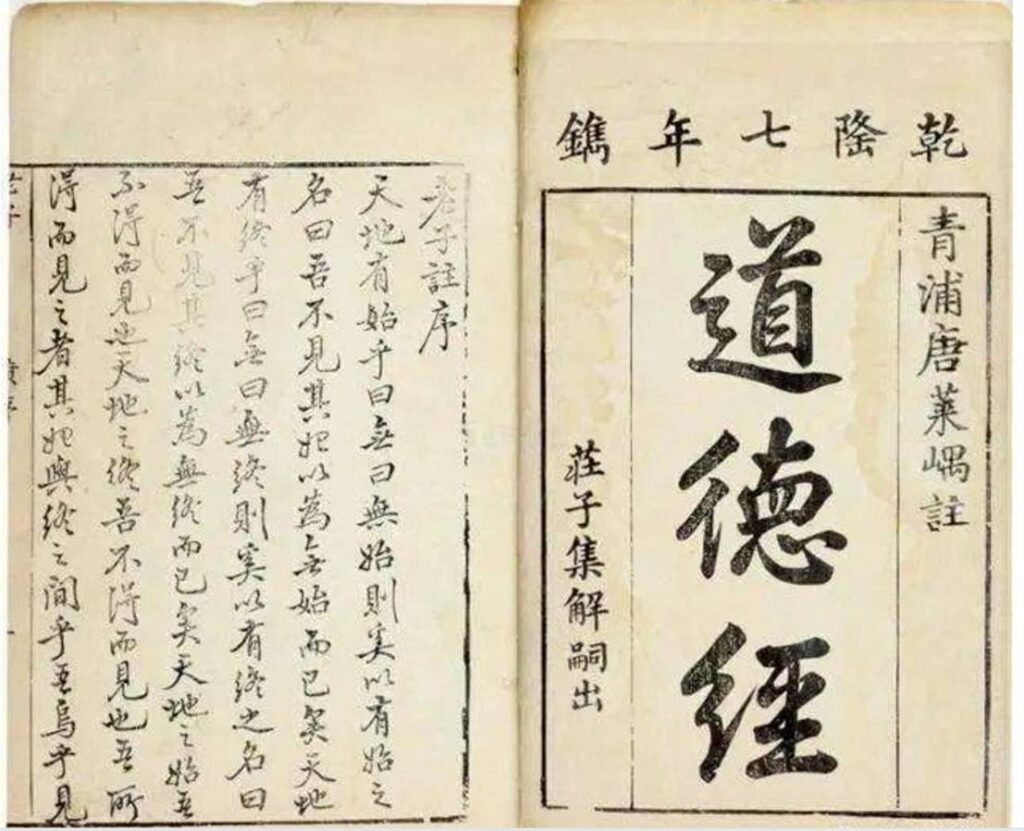
For many Western readers, approaching this ancient text begins with a very practical hurdle: how do you pronounce Tao Te Ching? If you’ve been saying it with a sharp, hard “T,” you are certainly not alone. The secret to mastering how to pronounce Tao Te Ching authentically lies in softening those consonants. In Mandarin, they sound much closer to a gentle “D” and “J.” Try rolling it off your tongue: “Dow Deh Jing.”
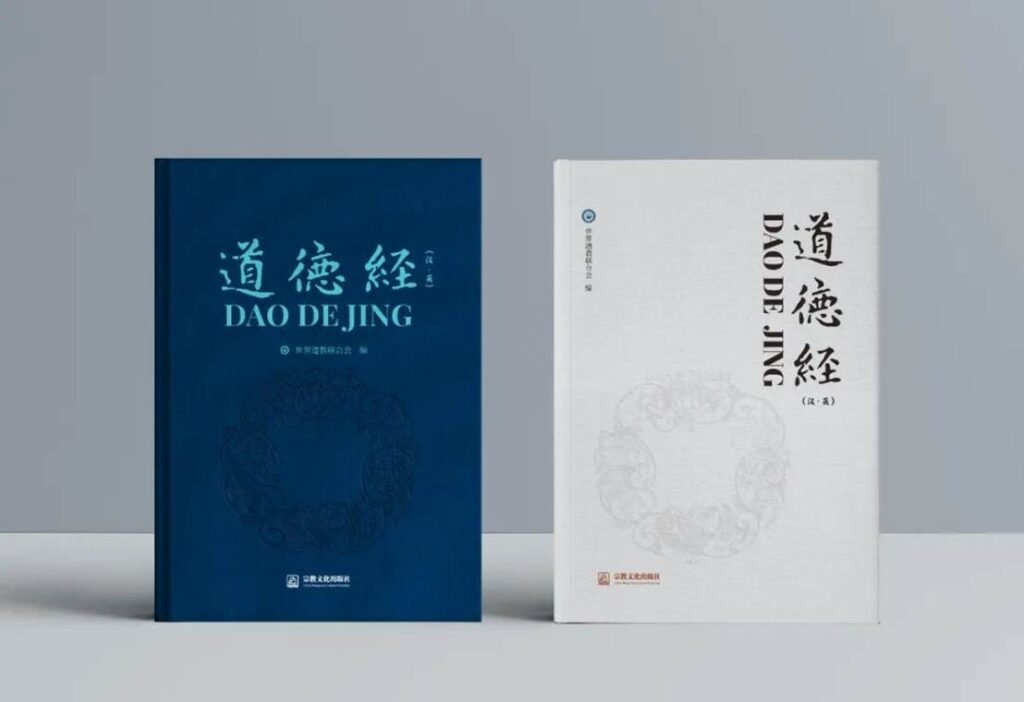
Once the sound feels natural, the next layer to uncover is the translation. Exactly what does Tao Te Ching mean? The character Te (德) translates to virtue, inner power, or inherent character, while Ching (经) denotes a classic, timeless text. Woven together, it is literally The Classic of the Way and Its Virtue—a profound philosophical manual designed to align human behavior with the natural rhythms of the universe.
What is the Meaning of the Tao Te Ching?
The Tao Te Ching is not simply a book about philosophy—it is a reflection on how we live, make decisions, and find balance in a constantly changing world.
One of its central messages is the return to simplicity. It reminds us that strength does not always come from pushing harder, that sometimes the best leaders know when to step back, and that leaving space can be just as valuable as filling it.
To better understand this timeless text, it also helps to look at its structure. Despite being one of the most influential philosophical works in history, the Tao Te Ching is surprisingly concise—containing only around 5,000 Chinese characters and divided into 81 short chapters.
What is the first chapter of the tao te ching?
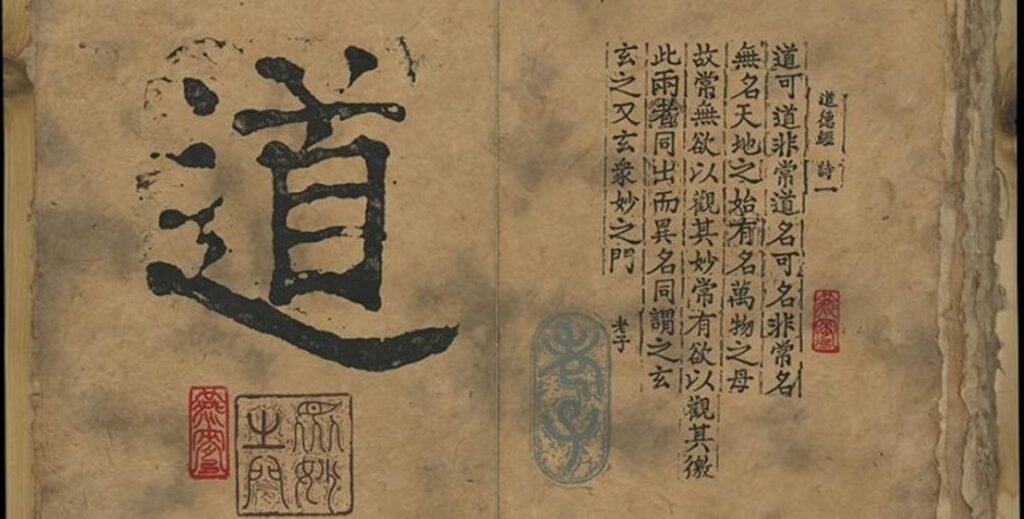
It famously begins with a profound paradox: “The Tao that can be spoken of is not the eternal Tao,” reminding us that ultimate truth cannot be rigidified into dogmatic words. As you read further, you will encounter the concept of Te. But what does the ‘virtue’ in the tao te ching mean? It does not mean moral righteousness. Instead, “Virtue” means the inherent excellence or unadulterated nature of a thing—being perfectly yourself.
Scholars often summarize what are the ten cores of the tao te ching? through tenets such as: naturalness, humility, non-contention, the strength of weakness, cosmic balance, cyclic return, the power of stillness, radical simplicity, leadership through service, and living in the present.
What is the Tao in Taoism?
To truly grasp what is the tao in taoism, we must step away from Western theological frameworks. When we ask what is the tao? , we are not talking about a personified creator or a judging deity.
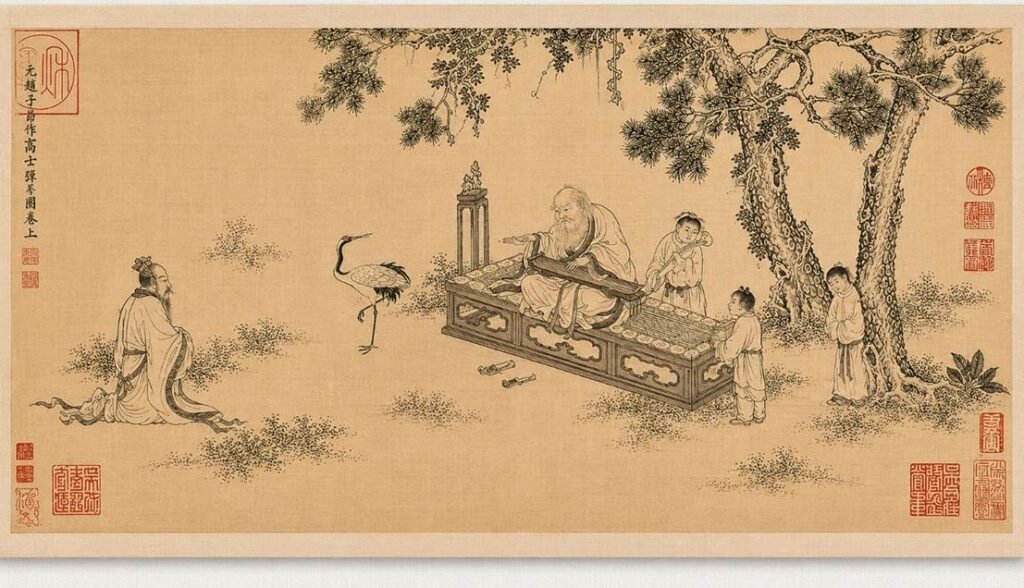
So exactly what is tao in taoism? It represents the ultimate, unnamable principle underlying all existence—the natural rhythm and flow of the universe. Everything operates through a dynamic balance of Yin (the receptive, the valley, the shadow) and Yang (the active, the peak, the light). They do not fight,they are interdependent. To live in accordance with the Tao means to master Wu Wei (effortless action). It is not about doing nothing, but about knowing when to act strategically and when to yield to the natural current.
Walking Your Path
If you are ready to explore this wisdom further, choosing the right translation of the Tao Te Ching can be a meaningful first step. Stephen Mitchell’s translation is widely appreciated for its modern clarity, while Gia-fu Feng and Jane English’s version is known for its poetic and philosophical depth.
In Chinese philosophy, a similar idea is expressed through the phrase “Wai Hua Er Nei Bu Hua” (外化而内不化)—remaining adaptable in the outside world while preserving inner clarity and balance.
Ultimately, the search for the Tao is not about finding a fixed answer, but about learning a different way of seeing the world.
Conclusion: Finding Your Own Path
The Tao is not a destination to reach, but a way of seeing and experiencing life. It reminds us that not everything needs to be forced, controlled, or understood immediately.
In a world that often encourages us to move faster and achieve more, the wisdom of the Tao offers another possibility: slowing down, listening deeply, and finding harmony with the natural flow of life.
Whether you are exploring the Tao Te Ching for personal growth, spiritual reflection, or simply a deeper understanding of yourself, the journey begins with a single step.
At My Tao Path, we hope to share ancient Chinese wisdom in a way that feels meaningful and relevant to modern life.
May you find clarity, balance, and your own path.
FAQ about Tao Te Ching
Q1: Who is the philosopher who wrote the Tao Te Ching, and how old is it?
The philosopher who wrote the Tao Te Ching is widely recognized as a legendary figure named Lao Tzu. As for exactly how old the Tao Te Ching is, historians estimate it was compiled somewhere between the 4th and 6th centuries BCE. That means this foundational text has been guiding people for well over 2,500 years.
Q2: How long is the Tao Te Ching, and how many chapters are there?
Despite its enormous influence, the Tao Te Ching is a surprisingly short text. It contains around 5,000 Chinese characters and is divided into 81 chapters, each exploring different aspects of the Tao and how we relate to the world around us.
Q3: Is Taoism a religion or a philosophy?
Taoism can be understood as both a philosophy and a spiritual tradition. At its core, Taoism focuses on living in harmony with the Tao—the natural way of the universe.
Unlike many Western religious traditions, Taoism does not center around a creator god or a single system of belief. Instead, it emphasizes balance, simplicity, humility, and alignment with nature.
For many modern readers, Taoism is approached less as a religion and more as a way of understanding life, relationships, and personal growth.
Q4: What is the best translation of the Tao Te Ching for a modern reader?
Since the original classical Chinese is so poetic and layered, there really isn’t a single best translation—it’s more about finding the one that speaks to where you’re at right now. Think of it as finding the right mentor for your current season of life rather than looking for a “right” answer.
If you’re looking for something modern and easy to read that you can actually apply to your work and daily life, Stephen Mitchell’s translation is a fantastic place to start. If you’re craving a more traditional, literal approach, the collaboration between Gia-fu Feng and Jane English is a true classic.
For those who want to dive deeper into the nuances and scholarly rigor, I’m also a big fan of the versions by Paul Fischer and Louis Komjathy—they offer some incredible depth for serious study. My best advice? Don’t feel pressured to pick just one. Browse through a few and stick with the one that just “clicks” for you.